To make a custom Magic card as a gift, pick the card type that fits the person, write abilities that come from their habits and your shared stories, add a photo or art you have the rights to, then print it at 2.5 × 3.5 inches. Sleeve it with a basic land behind it, or frame it.
What kind of card suits the person?
Start with who they are, then choose the card type that tells that story. The type does half the storytelling before anyone reads the text.
| Who it's for | Card type | Why it works |
|---|---|---|
| A friend, a partner, a parent | Legendary creature | A person with a name and an epithet |
| A shared memory or a trip | Instant or sorcery | An event that happened once |
| A home, a city, a favorite café | Land | A place you return to |
| A big occasion: a wedding, a proposal, a graduation | Planeswalker | The most dramatic card in the game |
| A pet | Creature or token | Small, loyal and always on the battlefield |
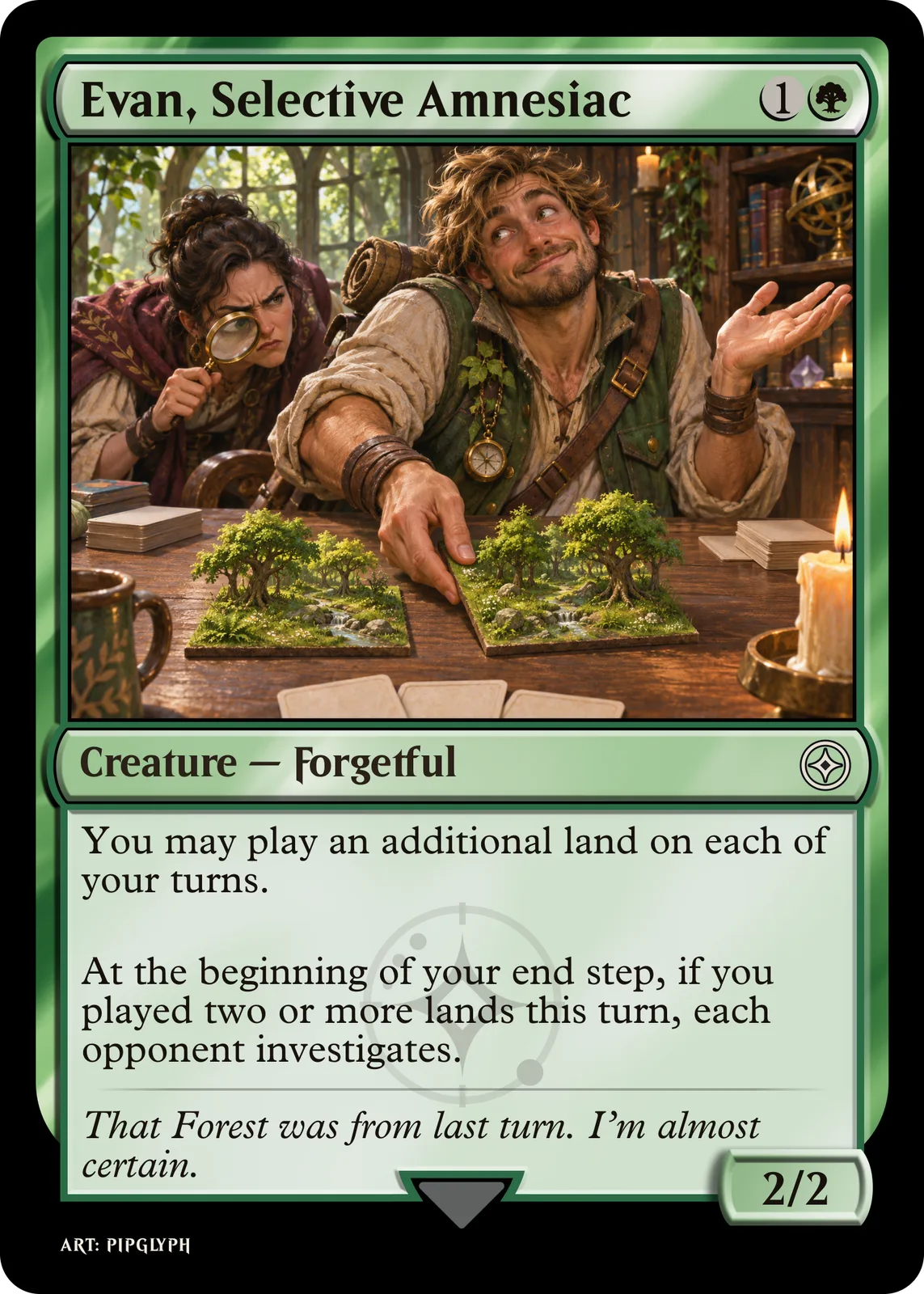
Legendary creatures are the classic choice. The name line does the work: "Name, Epithet" turns a friend into a character. The guide on naming custom cards covers how to find an epithet that sounds printed.
How do you write someone into the rules text?
Turn their habits into abilities, then keep the card playable.
- Start with a trait. Always early? A card that has an effect at the beginning of each upkeep. A great cook? A card that creates Food tokens. The best gift cards make the person laugh when they read the ability and nod when they play it.
- Use real templating. A gift card that reads like a printed card feels more special, not less. The guide to writing Oracle text has the patterns.
- Keep it fair if they will play it. If the card is going into their Commander deck, cost it like any other card. The guide on designing balanced custom cards shows how to compare with printed cards.
- Write your own flavor text. An in-joke, a line they always say, or the date you met. Original words are part of the gift; never borrow flavor text from a printed card.
If you are stuck, PipGlyph's AI card generator can suggest abilities from a short description. Treat its ideas as a draft and put the personal details in yourself.
What art can you use?
The picture makes the card theirs. Use art you have the right to use:
- A photo you took, or one the person or the photographer is happy to see on the card.
- Commissioned art. Many artists take custom card commissions. Credit them in the card's artist line.
- An AI picture made in the creator. One credit designs and illustrates a card, and a free account starts with five credits.
Do not use another artist's work or official card art without permission, even for a single printed gift. Whatever you use, fill in the artist credit. It is a small line that matters to whoever made the picture.
How do you print a custom card at real size?
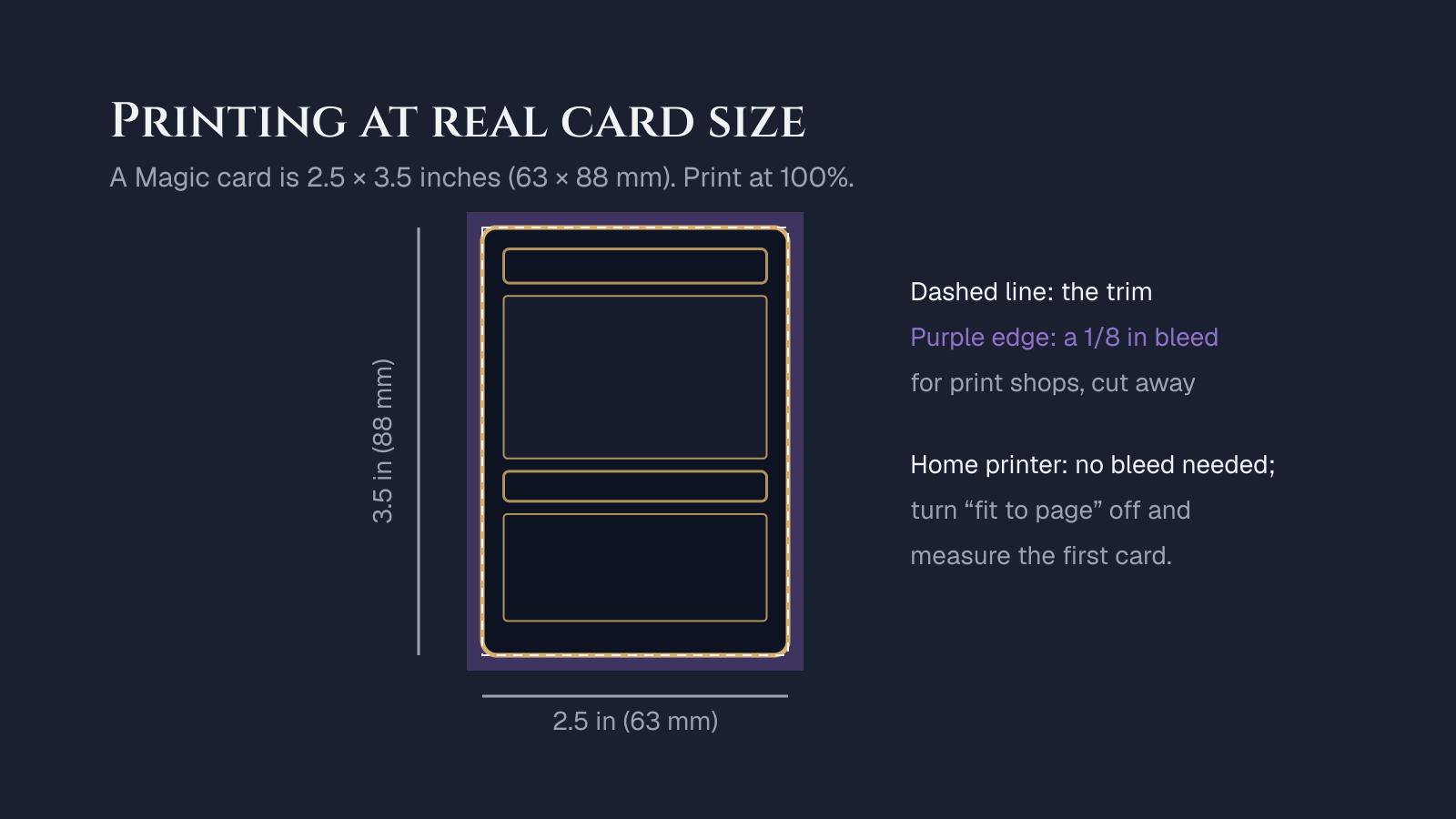
Print it at 2.5 × 3.5 inches (63 × 88 mm), at 100% scale, with any "fit to page" setting turned off.
What PipGlyph gives you depends on the plan:
- Every account downloads a 750 × 1050 image with a small PipGlyph mark. It is fine for a home print on photo paper.
- Plus and Pro download the clean 1500 × 2100 image, an 800 ppi file, a 1/8-inch bleed for print shops, a file sized for MakePlayingCards, and a PDF at exactly card size.
For a single gift, the PDF's "One card" page is the easiest route on a paid plan. On a free account, place the image in any document at 2.5 × 3.5 inches. Either way, print one test copy, measure it with a ruler, and only then print on good stock. The proxy printing guide and the printing help page cover paper, settings and cutting.
How do you present it?
A custom card is small, so the presentation does a lot of the work.
- Sleeve it with a basic land behind it. The card gains the weight and feel of a real card, and it can go straight into a deck.
- Add a toploader or a frame. A rigid toploader protects a card that will be shown more than played. A small frame turns it into a keepsake.
- Hide it in a booster-style envelope or tuck it into a birthday card.
- For a proposal or an announcement, shuffle it into their deck and let them draw it. Ask a friend at the table to keep the game going while the moment lands.
Can you sell custom cards?
No. Custom cards and proxies are for personal use: your own games, your playgroup and gifts. Selling them, or passing them off as real cards, crosses the line fan creations stay behind. A gift is exactly the kind of use the community celebrates.
When you are ready, open the card creator and start with their name.
Frequently asked questions
What size is a Magic card for printing?
A Magic card is 2.5 by 3.5 inches, or 63 by 88 millimeters. Print at 100% scale with any fit-to-page option turned off, and measure the first card with a ruler before you print the rest.
Can I make a custom Magic card for free?
Yes. A free PipGlyph account can design the card, save it and download a 750 by 1050 image with a small PipGlyph mark, which is fine for a home print. Plus and Pro add a clean high-resolution image and print files such as a PDF at true card size.
What art can I use on a custom card gift?
Use a photo you took or have permission to use, art you commissioned and credited, or an AI picture made in the creator. Never use another artist's work or official card art without permission, even for a single printed gift.
Can I sell custom Magic cards?
No. Custom cards and proxies are for personal, non-commercial use: your own games, your playgroup and gifts. Selling them, or passing them off as real cards, crosses the line that fan creations stay behind.